Today’s PuliSurkh, in the absence of those who breathed life into it, has been reduced to a physical shell emptied of its former meaning. However, beyond the concrete blocks and newly emerged commercial towers, this geography has been recreated as a cultural ecosystem within minds and the collective memory. Although the physical body of the city has taken on an "amnesic" form through the eradication of its gathering spaces and the installation of imposed symbols, PuliSurkh continues to pulse as a "lived archive"—an ecosystem that has altered its form of existence to transcend geographical boundaries, continuing its symbolic life through fluid narratives, embodied memories, and unfinished witnesses.
Today, PuliSurkh is no longer a fixed geographical coordinate; rather, it is a fluid and scattered geography, fragments of which breathe in cities like Kabul, Tehran, London, Hamburg, Toronto, and Berlin. The photographs, sounds, books, and narratives that traveled in the suitcases of the neighborhood's former residents now sustain an alternative form of this space's life in exile—a life that flows beyond the physical body, existing within embodied memories.
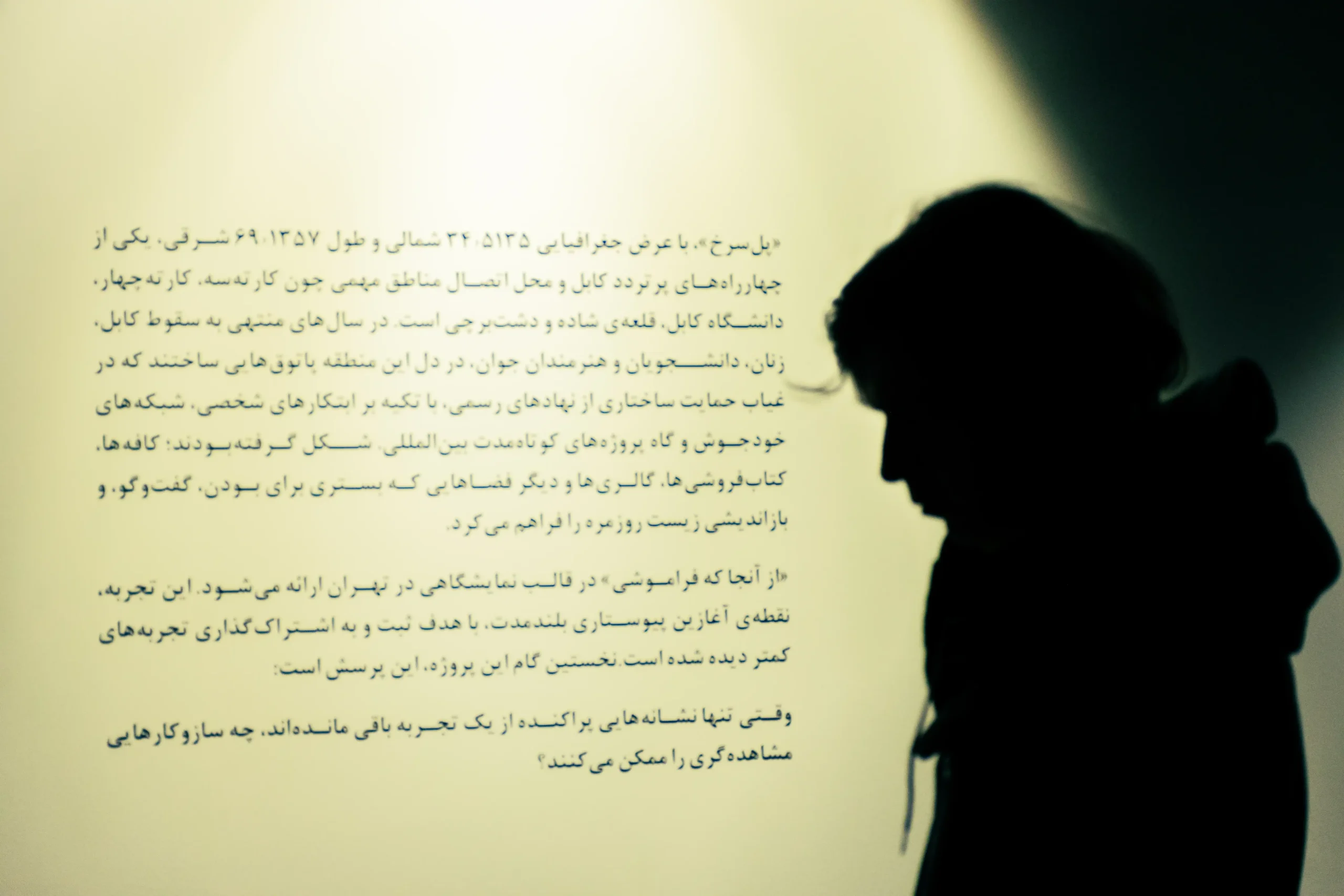
The project "As Everything Is Forgotten..." originated from this very point and with this question: How can one trace the footprints of a cultural ecosystem when its lifeblood—its people—are no longer present in that space? In the first phase of this project in Tehran, we sought to gather a portion of this multifaceted memory through interviews, family photographs, and sounds that held no place in official archives. As the project progressed, it became evident that this archive could not remain confined within the borders of a single city.(For further details about this exhibition, please see the Other Projects page.)
PuliSurkh itself is the product of displacement, migration, and historical ruptures; therefore, the scattering of its memory across different corners of the world is only logical. Accordingly, the project continues its journey in cities that currently host a fraction of this ecosystem's former inhabitants. Berlin is one of these key stations—not merely because it is home to many Afghan citizens, but also because the city itself carries a profound and enduring experience of migration, displacement, memory, and reconstruction.
What sprouted in Tehran now extends to Berlin, summoning a life that continues to flow within the narratives of unfinished witnesses and the layers of personal archives.